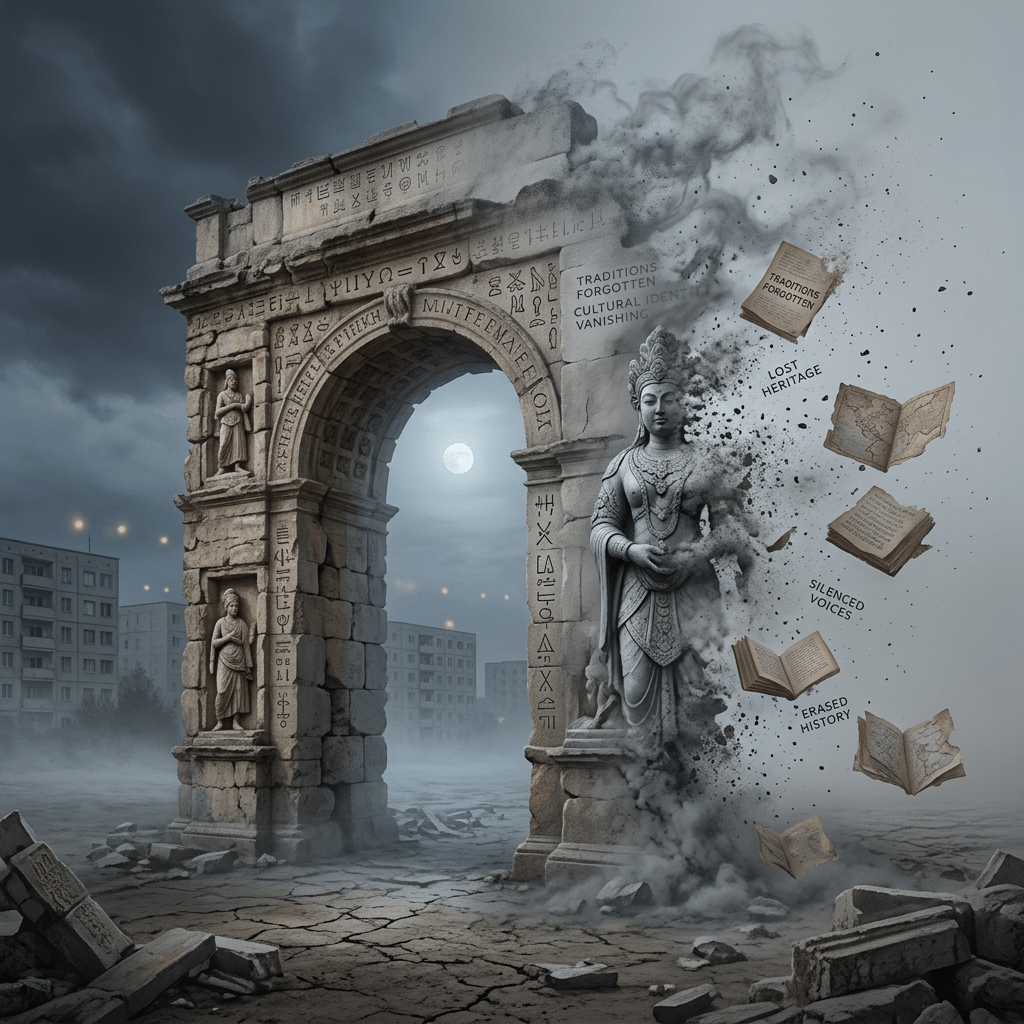
The world is riddled with complex challenges which need to be given importance and tackled. One such problem we face is cultural erasure. Cultural erasure is the systematic elimination or suppression of a group’s cultural identity, practices, and beliefs, often resulting from colonialism, assimilation policies, or societal marginalisation.
Many problems in the world are unknown to most of us. Cultural Erasure is a part of that group, because of cultural erasure, many people are forgetting their origins, and the next generation will have a lesser idea about these cultures. We need to remember these cultures because they foster global awareness, promote appreciation of diversity, and help build bridges between communities. By understanding different cultures, we can avoid stereotypes, improve communication, and develop greater empathy and respect for others. Additionally, cultural memory helps us understand our own identity and heritage.
To understand how to solve this problem, we first have to examine some factors that affect and cause it.
There are many factors which cause this issue. Imperialism is one of them. Imperialism is destructive as it erases the unique cultures, languages, and traditions of colonised peoples, leading to a cultural void and alienation. Dominant nations often suppress local customs and languages, imposing foreign educational systems and governance. For instance, during British colonisation in India, English became the language of governance, marginalising indigenous languages like Sanskrit and Tamil, and dismantling traditional learning systems such as gurukuls. This enforced intellectual domination limited access to local knowledge and created a situation in which the colonised could succeed only by adopting the colonisers’ culture.
Modernisation is also a factor. Industrialisation and many tech advancements have led to the abandonment of cultures because there is a belief in favour of modern ways of life. Modernisation affects society’s socio-cultural issues, changing the present condition of human society. As a result, people adopt new traits, trends and technologies, which are given according to the global perspective.
Economic pressures can also contribute to cultural erasure. Communities may abandon traditional practices and lifestyles in favour of those that are economically viable. Migration to urban areas for better economic opportunities can lead to the loss of rural or indigenous cultural practices.
Solutions to Cultural Erasure
Addressing cultural erasure requires recognising the issue, promoting cultural preservation, and fostering respect for diversity.
The first step in fighting cultural erasure is acknowledging it exists and understanding how it happens. Education is crucial for this. By including the history and contributions of various cultures in school curricula, societies can raise awareness about the importance of cultural diversity. Media and art can also highlight the impact of cultural erasure and celebrate cultural uniqueness.
Preserving endangered languages, traditions, and heritage sites is essential. Language revitalisation programs, such as teaching indigenous languages, can maintain linguistic diversity. Supporting cultural events, festivals, and traditional practices can keep cultural expressions alive. Governments and organisations should invest in restoring and protecting cultural heritage sites to ensure they are preserved for future generations.
Creating a society that respects and values cultural diversity is key to preventing cultural erasure. Policies promoting equal representation and participation of all cultural groups in public life help achieve this goal. Encouraging intercultural dialogue and exchange can foster mutual respect and understanding among different cultural communities. By celebrating and valuing diversity, societies can create environments where all cultures can thrive and coexist peacefully.
Cultural erasure is a significant issue that threatens the richness and diversity of our global heritage. However, through recognition, preservation efforts, and fostering inclusivity, we can combat this erasure and ensure that all cultures are respected and preserved. By valuing and celebrating our differences, we can build a more inclusive and harmonious world where all cultural identities are honoured and cherished.


Leave a Reply