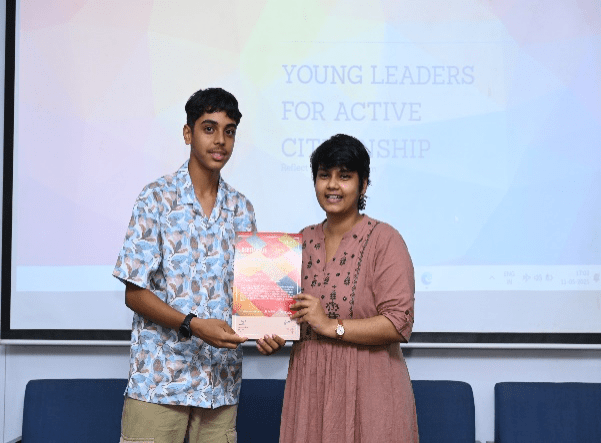
For the future leaders of tomorrow , here is my take on the YLAC programme and how it made a difference to me.
The Young Leaders for Active Citizenship (YLAC) programme is a seven-day intensive initiative aimed at empowering students aged 14 to 17 across India by exposing them to critical societal, political, and economic issues. Designed to cultivate active citizenship and leadership skills, YLAC draws students from a highly competitive applicant pool—over 450 compete for just 40 spots—demonstrating its exclusivity and impact. Throughout the program, participants engage in interactive sessions that diverge from typical classroom learning, focusing on real-world challenges such as racism, equality, democracy, advocacy, waste management, and leadership qualities.
Each day offers a multifaceted exploration of important themes. The first day introduces the challenges of consensus-building and identity politics, culminating in a debate about reservations. Day two confronts the persistence of caste-based discrimination and the complexities of equality and equity, highlighted by discussions and the screening of the film Selma. The third day offers hands-on learning about urban waste management through a field visit to a Bangalore facility, linking environmental sustainability with civic responsibility.
Days four and five delve into governance, constitutional structures, and the power of advocacy, including simulations that illustrate the dynamics between corporate interests and community rights. On day six, the focus shifts to business fundamentals and social entrepreneurship, epitomized by the example of Mitti Cafe, which champions inclusive employment for people with disabilities. The program concludes on day seven by reflecting on leadership qualities and celebrating the collective achievements of the participants.
YLAC, guided by mentors Shubra, Priyank, and Nathan, integrates personal growth with civic awareness, equipping youth to actively shape India’s future through informed leadership and compassionate citizenship.
Here are some key insights into the programme I attended
- 🌍 YLAC unites 40 select youth from 450+ applicants across India for a transformative 7-day leadership program.
- 🤝 Participants engage in consensus-building exercises mirroring real-world parliamentary challenges.
- ⚖️ Intense focus on social justice issues like caste discrimination, equality versus equity, and reservation debates.
- ♻️ Practical exposure to urban waste management and environmental sustainability in Bangalore.
- 🏛️ Deep dives into democracy, governance, and constitutional understanding with insights from experienced local politicians.
- 📢 Advocacy skills honed through role-playing media campaigns addressing corporate-community conflicts.
- ☕ Social entrepreneurship highlighted by Mitti Cafe’s inclusive employment model for persons with disabilities.
Learnings that each one of us share…
- 🤔 Experiential Learning Enhances Civic Engagement: YLAC’s use of hands-on activities, debates, and field visits helps students internalize complex social and political issues beyond theoretical knowledge. For example, the consensus-building exercise not only builds teamwork but simulates real-world legislative negotiation complexities, preparing students for active democratic participation.
- 🏛️ Understanding Social Inequality is Crucial to Leadership: The program’s attention to caste-based discrimination and manual scavenging sheds light on entrenched social injustices that affect millions in India. Highlighting these realities alongside global movements like Black Civil Rights struggles (the film Selma) fosters a holistic understanding of systemic oppression and the need for justice-driven leadership.
- ♻️ Connecting Sustainability with Civic Responsibility: Visiting a municipal waste management facility emphasizes the role of citizens in environmental stewardship. Learning that Bangalore produces roughly eight tons of waste daily creates awareness about urban challenges and the need for sustainable solutions—a perspective essential for future leaders balancing development and ecological well-being.
- 🏛️ Democracy and Governance Are Living Concepts: Discussions on political ideologies and governance realities, combined with insights from a former ward councillor, illustrate the gap between theoretical ideals and political practice. This imparts a nuanced understanding which motivates youth not only to critique existing systems but also to envision actionable improvements.
- 📢 Advocacy Requires Strategic Communication: The Malguidi campaign activity showcases the power of media and messaging when defending community rights against corporate harm. Such exercises teach young leaders that successful advocacy is rooted in clear narratives and active public engagement, critical for societal change.
- 💼 Inclusive Business Models Promote Social Equity: Mitti Cafe’s employment of people with disabilities demonstrates how economic enterprises can foster inclusion, breaking stereotypes about capabilities and supporting marginalized groups. Such examples inspire participants to merge entrepreneurship with social impact, reflecting leadership that serves broader societal goals.
- 🌟 Leadership Involves Adaptability and Consensus: The final day’s reflection on leadership qualities highlights that effective leaders value collaboration, informed decision-making, and flexibility. The prior consensus-building challenges equip participants with practical skills for leading diverse groups toward common goals, an indispensable asset in India’s pluralistic society.
For me this comprehensive blend of knowledge, action, reflection, and mentorship positions YLAC graduates as well-rounded, socially conscious, and proactive citizens ready to influence India’s socio-political landscape positively.
 Med Writes
Leave a comment