This was a question I attempted to write an essay on for John Locke Essay Competition . Unfortunately, it did not get shortlisted. I still think the thoughts are relevant for sharing with my audience!
“Our greatest glory is not in never falling but in rising every time we fall. – Confucius.”
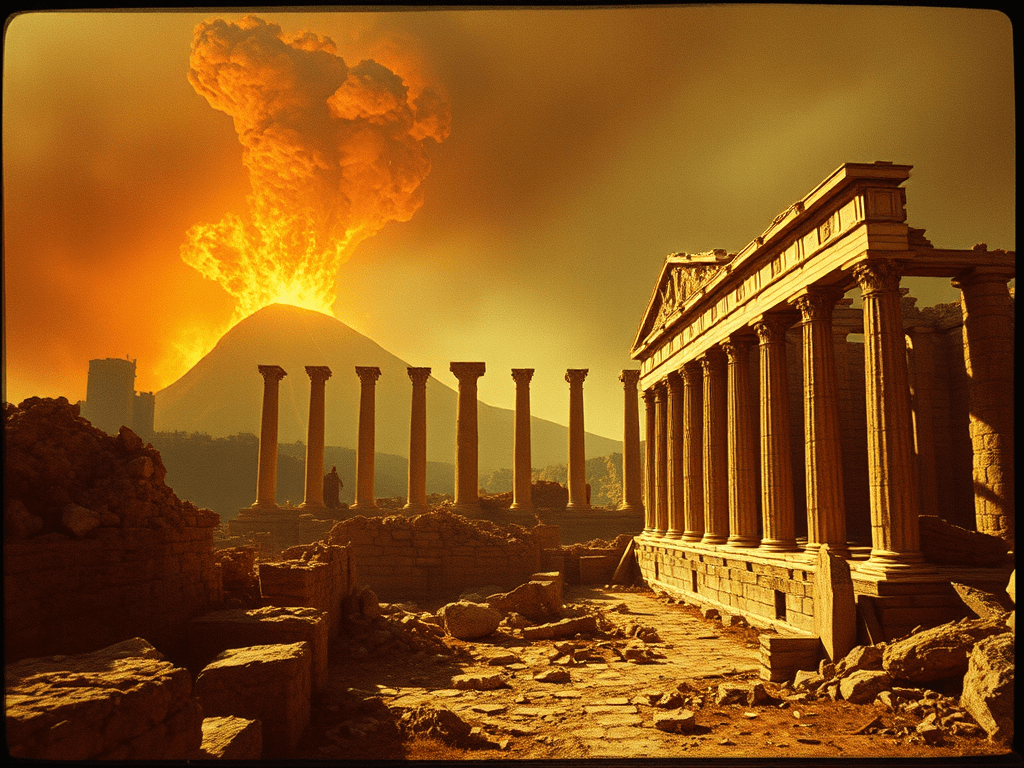
The Minoan Civilisation declined due to a volcanic eruption. The Roman Empire was affected by internal and external attacks, whilst the Clovis civilisation was impacted by a meteor. Many other civilisations collapsed, though not in the same way, but they did. By delving into the unique characteristics of different civilisations and their downfalls, the essay highlights various contributing factors to their ruin, such as warfare, disease, environmental changes, and internal decay.
Furthermore, this essay underscores the essential elements that civilisations require to thrive: a substantial population, food surplus, centralised government, religious unity, and taxes. Any deficiency in these areas can lead to catastrophe, potentially resulting in the loss of human life, societal breakdown, and the destruction of cultural heritage. It also highlights a significant historical pattern: the decline of civilisations. Delving further into the present-day scenario, the essay addresses the crucial points required to understand the problems that threaten our civilisation, how the crisis developed, and how to determine the path forward. It highlights various threats such as armed conflict, migration, terrorist attacks, adverse effects of new and rising technologies, and biological, chemical, or nuclear hazards. The potential consequences of our civilisation’s collapse are theoretical and could be a reality we face soon.
The essay considers the development of the crisis and mentions the impact of globalisation, which has triggered the gradual decline of our ecosystem. Many people have written about this topic, but it is still a puzzle. So why does civilisation collapse? And what causes it? Is our civilisation in danger? These are not just rhetorical questions but urgent ones that demand immediate attention. We must understand these questions and their implications for our society, as the need for immediate action is becoming increasingly apparent.
Civilisation is derived from the Latin words “civis = citizen” and “civitas = city”; it is a term applied to any society that has developed a writing system, government, surplus food production, and urbanisation.
Many civilisations have existed throughout world history, some of which rose back to glory, as in China. In contrast, others declined, never to stand up, as in the Ester Islands and The Maya. There have been many civilisations, and downfalls have occurred in all of them. The reasons vary from civilisation to civilisation, as each civilisation has unique characteristics that can contribute to its ruin. Since there have been many civilisations, historians and archaeologists have studied their collapse and found many similarities between the destruction of society.
Civilisations require several factors to thrive, including a large population, food surplus, centralised government, religious unity, and taxes. A deficiency in any of these areas can lead to collapse. Historical collapses often result from multiple factors, including warfare, disease, environmental changes affecting food supply, economic sustainability issues, and internal decay. These factors become evident when one looks at the collapse of civilisations such as the Inca [1200 to 1533 AD], where warfare resulted in its destruction, or the Khmer [802-850;1417-1431AD], where internal squabbling led to its downfall.
As referenced above, the report published by Resilience in 2020[i] states that our civilisation is not in gradual decline but at risk of collapse. This stark statement challenges the historical pattern of civilisation’s decline. It’s a call to action, a reminder that we must reflect on the past to secure our future for future generations.
Let us look at the factors and what they mean:
- Climate change can devastate civilisations, leading to crop failures, famine, population displacement, and conflict over dwindling resources. Civilisations rely on their surrounding environment for resources and sustenance. Overexploitation of resources, deforestation, soil erosion, and pollution can lead to ecological collapse, eventually leading to society’s fall.
- Law and order are also essential factors in maintaining society. Without them, society would crumble under the weight of crime, which would and would happen internally, as seen in the Western Roman civilisation.
- Exhaustion of crucial resources like water, arable land, or minerals can weaken a civilisation’s economic and social foundations. Without access to essential resources, societies struggle to maintain firmness and growth, which are needed for a civilisation’s success.
- Crises such as plagues also devastated civilisation because we have seen plagues affect civilisation, such as in Egypt and countries in medieval Europe.
- Benign Weather Modification (BWM) contributes to civilisation collapse when combined with other factors.[ii]
- Disruptions in Trade combined with other factors
The Western Romain Empire saw a significant decline from AD 250 to 270 due to climate change, famine, migration, an advance in transport, and warfare followed by the pandemic. A drastic slackening of the movement of the Atlantic air mass across Europe and beyond produced a significant drought, resulting in what has been called a “dust bowl” in Central Asia.[iii] The weather-spurred migration of the Huns pressed against the Gothic tribes to the west and north, who, in response, moved south into the Roman Empire. After more than a century of recurring battles, interspersed with alliances and reciprocal betrayals often accompanied by slaughter, Rome fell to a Gothic assault in AD 410.
While the Western Roman Empire collapsed by the beginning of the 5th century AD, the Byzantine Eastern Roman Empire revived until the dramatic events of the Late Antique Little Ice Age of AD 536 to 680. The frigid climate of the period was due in part to a series of volcanic eruptions[iv] in early AD 536, AD 539–540, and AD 547, a cluster of eruptions unmatched in the last 3000 years. The 530s and 540s were the coldest decade since the Ice Age. The significantly stunted tree rings at AD 550 signal a year of frigidity. During the volcanic eruptions, the sun itself may have entered a periodic cycle during which it radiated less heat toward the earth.[v] It is worth noting that AD 550–600 marks a period of reduced rainfall and societal collapse at the great centre of Teotihuacan in Mexico as well.
In the 10th century, the Medieval Warm Period began. This period includes the unique and counter-intuitive case of benign weather’s significant role in destroying civilisations. Examination of tree rings of Siberian pines in central Mongolia provides evidence for sustained rainfall and unusually mild weather between AD 1211 and 1225, which coincides precisely with the conquests of the Mongols under Genghis Khan, accompanied by widespread destruction and slaughter. Pastures suddenly rich after a preceding drought provided fodder for the herds of war horses, enabling the Mongol armies to conquer lands from China to Hungary. In short, the unusually mild climate produced the grass power that provided the critical horsepower, plus the necessary fodder for the camels, yaks, cattle, and sheep accompanying the invaders.[vi]
The above interpretations give us a glimpse into the factors that can contribute to the ruin and fall of many great civilisations. Now, we focus on the bigger question for the present. Is our civilisation in danger?
- Localised extinction of human life in recent years as seen in World War Two and currently in Sudan and The Darfur and Rwanda Genocide.
- Globalisation is the network that has brought the world closer and more connected. It has its advantages but has also helped trigger water depletion. How? Globalisation increases the number of industries on Earth, increasing water usage. The movement of goods overseas also has an effect as the chemical pollutants can get released out in open waters, reducing the amount of water that can be used.
- The collapse of ecosystems and loss of biodiversity caused by waste constantly removed onto lakes, rivers, seas, and other water bodies will drastically affect the environment. Numerous cases have proven this harmful. One such event was The Chornobyl Disaster. The reduction of forests also plays a significant role, as many animals are being forced out of their habitat and killed, which causes the collapse of the ecosystem and desertification.
- The risk of pandemics is ever present, as shown by the appearance in recent years of HIV, Ebola, Lassa, West Nile, Nipah, SARS, MERS, and the Zika virus, the transmission of which is fostered by the democratisation of air travel. The Gates Foundation has estimated that if an influenza pandemic like 1918 erupted today, about 33 million people would die within the first six months. Unlike in past centuries, there is today the non-trivial risk of a deliberate bio-terror attack. One bioterrorist carrying a cocktail of deadly pathogens might cause a pandemic, killing many millions.
- Adverse effects of new and rising tech, like the development of Artificial Intelligence (AI), can lead to job displacement, thus triggering a change in demographics and earnings per capita. It also contributes to massive amounts of heat generation and electricity consumption, draining our natural resources, which are used to support this advancement.
- Armed conflict plays a significant role in the destruction of our civilisation, as seen in the ongoing war in the Gaza Strip and Europe, Russia, and Ukraine. These conflicts have killed a significant number of people in the area, which affects them. As mentioned above, we need a large population to maintain our civilisation.
- Benign Weather Modification (BWM) also presents danger, as we see in Dubai, where artificially induced rain clouds over a period suddenly caused havoc to the city with flash floods, for which the city was caught unaware and underprepared to defend itself.
- Extraterrestrial objects like asteroids from space pose a grave threat as the chances of Earth getting hit by an asteroid have increased.
The combination of the above factors may have triggered a “global tipping cascade” that would lead to a less habitable “Hothouse Earth”. Unsurprisingly, earlier interpretations of history and insights draw parallels to what we are witnessing now, but with more extreme consequences.
The above describes what is clear and present danger in front of us, but steps are being taken to pull back a habitable earth for humanity through efforts like the Double Asteroid Redirection Test (DART). It is also undeniable that conflicts cannot be halted; disputes between nations will persist. The aspiration for world peace is universal – an ideal world where conflicts cease to exist. While this may seem distant, recent studies indicate a positive trend towards global peace. Therefore, it is imperative for all individuals to actively promote peace and kindness, as it is essential in striving towards achieving world peace. AI can take over the world, but there is a way to stop it[vii]. Stuart Russell, a leading AI scientist at Berkeley, offers an intriguing solution. He says, “Let’s design AI so its goals are unclear. We then allow it to fill in the gaps by observing human behaviour. The AI’s goals will be ours”. By learning its values from humans, AI can be structured just like us, acting and being like us. Climate change is a vast and significant topic to protect our civilisation.
Our civilisation has progressed on many fronts, such as science, medicine, etc. Still, we also have progressed in fronts which are not meant to be progressed in, such as the military, as we will keep on creating and acquiring new and more destructive weapons to annihilate countries and conquer places as human greed can’t be defeated, but what we could try to do instead of overpowering the greed is try to control it, get it to a certain level which is not too destructive to the Earth. We also must focus on our negligence of objects and rules and the nature of the Earth. We have been disposing of wastewater, garbage, and other waste products into the rivers, seas, and oceans. We must curb this and, if necessary, protest and demonstrate against it to show that we can’t neglect the Earth’s and nature’s wellness.
In the words of Churchill: “Study history, study history. In history lies all the secrets of statecraft.” Continuing studies of the collapse of past civilisations and instances of survival under stress will provide valuable insights for the future.
[i] https://www.resilience.org/stories/2020-08-10/four-reasons-civilization-wont-decline-it-will-collapse/
[ii] https://media.defense.gov/2017/Dec/28/2001861722/-1/ 1/0/T_COBLE_BENIGN_WEATHER_MODIFICATION.PDF
[iii] McCormick, M., U. Büntgen, M.A. Cane, E.R. Cook, K. Harper P. Huybers, T. Litt, S.W. Manning, P.A. Mayewski, A.F.M. More, K. Nicolussi, and W. Tegel. 2012. “Climate Change During and After the Roman Empire: Reconstructing the Past from Scientific and Historical Evidence.” Journal of Interdisciplinary History 43.2:190–192; Harper, K. 2017. The Fate of Rome, 191–192. Princeton: Princeton University Press.
[iv] Eppinga, R., Huizinga, A., & Marcus, L. (2017). How Can Christians Understand and Respond to the Concept of Mass Extinctions? (Leader\u27s Guide). https://core.ac.uk/download/214227007.pdf
[v] Harper, K. 2017. The Fate of Rome, 44, 254. Princeton: Princeton University Press.
[vi] Pederson, N., A.E. Hessl, N. Baatarbileg, K.J. Anchukaitis, and N. Di Cosmo. 2014. “Pluvials, Droughts, the Mongol Empire, and Modern Mongolia.” Proceedings of the National Academy of 111.12:4375–4379. doi:10.1073/pnas.1318677111.
[vii] How to prevent AI from taking over the world. https://www.newstatesman.com/ideas/2021/02/how-prevent-ai-taking-over-world
 Med Writes
Leave a comment